Belt drive or direct drive for a beginner: does it change how records sound?
As an Amazon Associate we earn from qualifying purchases. Some links on this page are affiliate links, which means we may earn a small commission if you make a purchase.
The difference between belt drive and direct drive is mechanical: where the motor sits and how torque reaches the platter. For a beginner, the choice isn’t about sound quality but about how you use the deck. Do you need precise start/stop control, or are you looking for straightforward set-and-forget playback?
Our Pick
- Mostly listening to albums at home, want clean sound without handling records much: Belt drive—the elastic belt buffers motor vibrations from the stylus, giving you quieter playback. Solid options like the Rega Planar 1 or Pro-Ject Debut Carbon are available from UK retailers such as Richer Sounds and Audio Affair.
- Planning to cue records, scratch, mix, or adjust speed frequently: Direct drive—the instant platter response handles repeated handling without the mechanical lag a belt introduces. The Audio-Technica AT-LP120XUSB (paid link) is a standard example of this design.
Check AT-LP120XUSB price → (paid link)
The mechanics behind each drive system
A belt-drive turntable has the motor sitting off to one side, connected to the platter by a thin rubber belt. Think of it like a rubber band looping between two gears—one turned by the motor, the other around the platter spindle. That belt transfers the rotation.
A direct-drive turntable does exactly what the name suggests: the motor sits directly beneath the platter, often sharing the same spindle, and drives it without any intermediary. No belt. The motor and platter are mechanically coupled.
The physical difference is a pulley system versus a direct mechanical link. That’s it. The belt isn’t a failure mode or a compromise; it’s a design choice with a specific consequence for how vibrations travel. If you look under a belt-drive deck, you’ll see the motor sitting to the side, usually behind a damped housing. In a direct-drive deck, the motor is typically hidden underneath the platter.
One practical note if you’re buying used: belt-drive decks age in a way that’s visible and fixable. The rubber belt can perish, stretch, or snap. With direct drive, the motor is sealed and the maintenance story is different—but more on that shortly.
Vibration isolation versus platter response
Here’s where the folklore gets loud: the sound difference isn’t about one being “warmer” or “brighter.” That’s preference talk dressed up as physics.
What the belt actually does is buffer vibrations. Even a good motor vibrates slightly as it spins. In a belt-drive deck, those vibrations have to travel through the elastic belt before they reach the platter and the stylus riding in the groove. The belt absorbs a meaningful amount of that energy. This is why belt-drive turntables are often preferred for pure music listening—the stylus isn’t fighting its way through motor noise on quiet passages.
Direct drive’s story is the opposite. Because the motor connects straight to the platter, any vibration from that motor transmits more readily to the stylus. This isn’t a defect; it’s the trade-off for what direct drive does well.
That thing direct drive does well is response. When the motor is directly coupled, the platter starts and stops exactly when the motor tells it to. There’s no belt to catch, no elastic lag. For someone cueing a record—sliding the tonearm back to find a start point, then dropping it precisely—that immediate response matters. The same applies if you’re adjusting speed or working with tempo. This is why direct-drive decks dominate DJ setups and professional environments where repeatability matters more than absolute isolation.
For a beginner sitting in a UK living room playing a record start to finish, the vibration isolation of belt drive is the more relevant benefit. The “warmer” or “more immediate” debate in forums is mostly people describing a preference they built after owning one or the other—not a rule the physics enforces.
Your cartridge and your record condition matter far more for sound quality than whether the drive is belt or direct. A dirty record on a well-set-up belt-drive deck will sound worse than a clean record on a direct-drive deck with a basic cartridge. Remember that hierarchy before spending extra on drive type.
What to expect with maintenance
Belt-drive turntables have one maintenance requirement that direct-drive decks don’t: the belt itself.
Rubber belts are reliable, but they are rubber—and rubber ages. Over years, a belt can stretch, harden, or crack, and you’ll notice the platter speed drifting or a faint squealing noise. Replacing a belt is cheap—most cost a few pounds—and it’s a straightforward job on most decks. If you’re buying a used belt-drive turntable where you can’t see the belt or test the deck first, you’re taking a small gamble on whether it needs replacing soon. There’s no fixed lifespan—it depends on temperature, use, and storage conditions. A belt kept in a cool, dry flat can last for many years. One stored in a garage or exposed to heat perishes much sooner. If you buy a second-hand belt-drive deck, it’s worth budgeting for a replacement belt as a matter of course.
Direct-drive turntables don’t have a belt to replace. The motor is usually a sealed unit. What direct-drive motors can develop is bearing noise or, in older decks, degraded speed circuitry—but these are less common than belt wear, and fixing them tends to be more involved.
For a beginner who wants to set up a deck and not think about maintenance for a few years, the belt-replacement question is worth factoring in. It’s not a dealbreaker, but it is a known step that belt-drive owners eventually encounter.
Price and availability in the UK
For home listening—putting on an album, sitting down, not touching the record again until side two—belt drive is the better fit. The vibration isolation means cleaner sound on quiet passages. Models like the Rega Planar 1 (priced around £239–£329) and the Pro-Ject Debut Carbon are widely stocked by UK hi-fi specialists.
For anyone planning to handle records actively—cueing, back-cueing, adjusting speed, learning to mix—direct drive is worth the extra cost. The instant platter response is what makes those activities feel natural. The Audio-Technica AT-LP120XUSB, for example, is typically priced between £250 and £350.
Your budget matters. If you’re starting with a modest all-in-one deck that came with a cartridge already fitted, the drive type is already decided. Spending money on a new direct-drive deck before you’ve sorted record cleaning and stylus condition is the wrong order of operations.
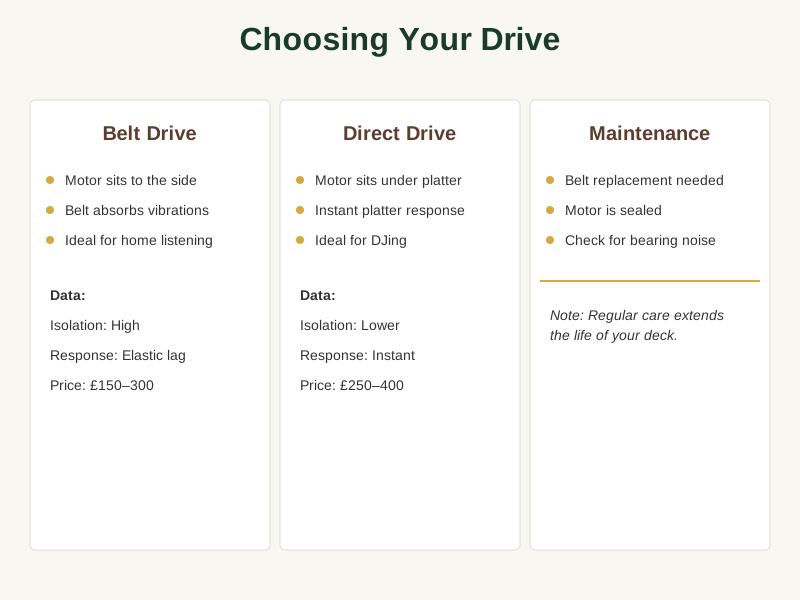
Belt Drive vs Direct Drive: Key Differences
| Feature | Belt Drive | Direct Drive |
|---|---|---|
| Motor Position | Off to the side | Directly beneath platter |
| Vibration Isolation | High (belt absorbs noise) | Lower (motor noise transfers) |
| Platter Response | Elastic lag | Instant start/stop |
| Maintenance | Belt replacement required | Motor is sealed, less maintenance |
| Best For | Home listening, quiet passages | DJing, cueing, speed adjustment |
| Typical Price Range | £150–300 | £250–400 |
Making your choice
If your priority is start/stop control, choose direct drive. If it’s straightforward listening, choose belt drive. The drive type matters, but for specific reasons—vibration isolation or platter response—not because one is simply better than the other.
Before you blame the drive type for sound issues, check the basics: a worn stylus, a dirty record, or a missing ground wire will each make your music sound worse than any difference between belt and direct. If you’re not sure what’s actually going on with your setup, the free checklist walks through the things worth checking first. Grab it and work through your deck systematically—you’ll often find the issue isn’t where you expected it to be.
Get the Free Record Care Checklist to audit your setup.
Related Guides
For a complete overview, see our Do you need a phono preamp? The setups where you do, and the ones where you don’t .
References
- Audio-Technica AT-LP120XUSB product page
- Rega Planar 1 product page
- Pro-Ject Audio Systems product page
As an Amazon Associate we earn from qualifying purchases. The products linked above are ones we recommend based on independent research and owner feedback.
Note: General guidance only, verify details with a qualified professional or official source.