Inner and outer sleeves: which ones are worth buying and which are marketing

Consider the maths: you’ll spend 15p on an inner sleeve to protect a £50 limited edition. That asymmetry defines vinyl care – the cheapest consumable in the hobby guards your most valuable assets. Yet most records ship with paper sleeves that shed fibres into grooves with every play. Those fibres become permanent groove wear you’ll hear as crackle after a few dozen plays.
Sleeve marketing often obscures this simple reality with expensive language. When “audiophile rice paper” sells for a 50p charity shop find, clarity matters. The evidence points to a clear split: inner sleeves are the non-negotiable upgrade, with one material doing the job cleanly. Outer sleeves protect the jacket, not the record, and their value depends entirely on whether the cover deserves preservation.
Separating sleeve functions from marketing fiction
The industry benefits from blurring two distinct protective roles.
Inner sleeves sit between the vinyl and the world, contacting the disc surface directly. Their purpose is to reduce handling friction, minimise dust and static transfer into grooves, and prevent paper covers from shedding onto playable surfaces.
Outer sleeves cover the jacket without touching the vinyl. They protect artwork from shelf wear, scuffs, moisture, and gradual degradation from open storage.
This distinction matters because marketing sometimes implies premium sleeves improve sound quality or reduce skipping. Sleeves protect storage condition; they don’t fix playback issues. Skipping or crackling stems from dirty discs, worn styli, incorrect tracking force, or physical damage – problems sleeves cannot address geometrically.
While anti-static inner sleeves genuinely reduce dust attraction, and archival rice-paper suits irreplaceable pressings, the leap from “protects in storage” to “improves playback” is where marketing takes over.
Why inner sleeve material changes everything
The inner sleeve’s function involves balancing friction reduction, static control, and fibre transfer prevention. Material choices create clear trade-offs.
Standard paper inner sleeves – bundled with most new records – perform poorly across all metrics. They generate static, shed fibres continuously, and compress over time, leaving discs resting against uneven surfaces. Many collectors report visible fibre accumulation on records within months of using paper sleeves, with audible surface noise increasing noticeably.
Polyethylene inner sleeves (often marketed as anti-static) outperform paper comprehensively. Their smoother surface reduces friction and static generation while eliminating fibre shedding. The material properties of high-density polyethylene create inherent anti-static characteristics that minimise dust attraction. For regularly played records, this category delivers undeniable benefits.
Anti-static paper sleeves – chemically coated paper – sit between these options. They reduce static compared to plain paper but continue shedding fibres, with coatings that degrade over time. While suitable for archive copies rarely handled, polyethylene proves superior for frequent use.
Archival-grade rice paper sleeves command premium prices without proportional benefits for most collectors. Proponents cite better breathability reducing moisture trapping – legitimate for humid storage environments like lofts or garages. However, for records played regularly in typical UK homes, the breathing advantage proves marginal against the trade-offs of rougher surfaces, higher friction, and continued fibre shedding.
The mechanism favouring smooth HDPE is straightforward: reduced sliding resistance minimises static generation and fibre dislodgement. Combined with inherent anti-static properties that decrease dust attraction, these factors address primary sources of surface noise in regularly played records.
The practical rule: smooth anti-static HDPE or polyethylene for every record in regular rotation. Plain paper suffices for sealed pressings stored long-term but harms anything played frequently.
Outer sleeves: protecting the package, not the sound
Outer sleeves shield jackets from shelf wear, light damage, and scuffing from tight packing.
Critically, outer sleeves never contact vinyl and cannot affect playback directly. Purchasing them to protect records themselves misallocates funds.
However, jacket protection remains valuable. Thin card covers develop scuff marks against neighbours over time, with split seams common on older pressings stored without protection. Gatefold covers, embossed or foil-lettered editions, and any pressing where the jacket holds value justify outer sleeves.
Polyethylene outers (often sold as thick or high-density) offer greater durability against puncturing and better light protection. The trade-off involves slightly reduced clarity, though differences remain minimal except under direct sunlight.
Polypropylene outers typically provide thinner, more transparent protection at lower cost. They suffice for basic jacket protection but offer less physical resistance against shelf scuffs and corner wear over time.
BOPP (biaxially-oriented polypropylene) outers with resealable flaps represent the premium option. The resealable flap narrows the top gap where dust enters. For records stored flat or upright, this design reduces dust ingress compared to open sleeves – a physical advantage, though price justification depends on storage environment and handling frequency.
Dual-pocket outer sleeves accommodate gatefold pressings and multi-disc sets, keeping components together. Standard single LPs require only basic outer sleeves.
The honest position: outer sleeves remain optional. Standard polyethylene outers satisfy most needs. Paying archival prices for jackets of minimal value represents marketing excess.
Where your sleeve budget delivers returns
The upgrade genuinely worth purchasing – delivering benefits paper cannot – is smooth anti-static HDPE or polyethylene inner sleeves. This represents a material science victory where surface properties reduce physical damage occurring with every handling. The modest cost for quality HDPE inners compounds protective benefits over time.
The upgrade rarely justified for most collectors is archival rice paper inner sleeves for everyday records. While breathability matters for irreplaceable pressings in uncontrolled environments, the friction and fibre trade-offs disadvantage rice paper for weekly play.
Marketing employing vague terms like “enhances vinyl protection” without specifying material advantages should raise scepticism. If descriptions cannot articulate what a sleeve does that standard HDPE doesn’t, it likely offers no meaningful difference.
Matching sleeve choices to collection profiles
Building a sleeve strategy for mixed collections involves matching options to usage patterns.
For weekly-rotation collections: smooth anti-static HDPE inner sleeves universally. This investment repays with every play. Outer sleeves become optional additions for covers with aesthetic importance.
For archival collections with infrequent play: HDPE inner sleeves as default, supplemented by polyethylene outers for jackets in decent condition. Resealable BOPP flaps only justify cost in genuinely dusty environments.
For valuable or irreplaceable pressings: dual-pocket outers for appropriate formats, HDPE inners, and – for storage experiencing temperature or humidity variation – archival rice paper becomes defensible.
For budget-conscious starter collections: anti-static paper sleeves represent an improvement over standard paper. The polyethylene upgrade remains worth saving towards, but replace original paper sleeves once they show creasing or discolouration.
One scenario alters recommendations: significant humidity variation in coastal flats, damp-walled houses, or cold clammy spaces strengthens the moisture argument for rice paper or breathable paper inners. In consistently dry or moderate UK homes, this concern rarely applies practically.
Cutting through the sleeve story
Summarising actual benefits versus marketing claims:
- Anti-static HDPE inner sleeves reduce dust, friction, and fibre transfer – the clear default for regular players
- Anti-static paper sleeves reduce static but still shed fibres – useful as budget step-up, not final solution
- Rice paper sleeves offer breathability advantages for archival storage in variable humidity – friction and fibre trade-offs disadvantage them for frequent play
- Polyethylene outer sleeves protect covers from shelf wear – standard thickness suffices, thicker versions increase physical protection
- Polypropylene outer sleeves provide basic jacket protection but less physical resistance over time
- BOPP resealable outers reduce dust ingress – premium justification depends on storage conditions
- Dual-pocket outers suit gatefold and multi-disc formats practically
None address skipping records, crackle from groove wear, or playback quality on damaged pressings – the myth worth recognising.
Your collection profile determines which sleeve upgrade matters first. The played-weekly collection demands anti-static HDPE inners immediately. The long-term stored collection benefits from HDPE inners with optional outers. The bought-to-resell collection needs both quality inners and outers preserving condition.
Now you understand which sleeves deliver value – get the Free Record Care Checklist to maintain your entire record care routine.
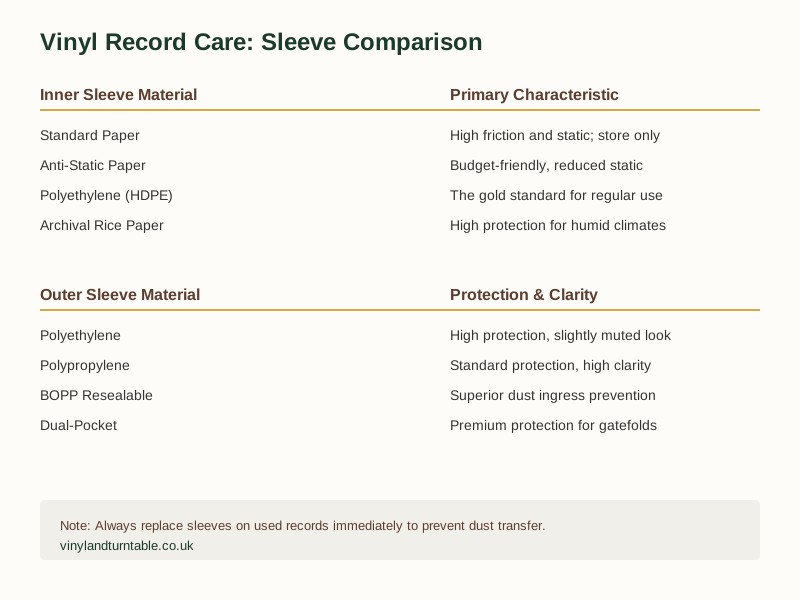
Inner Sleeve Material Comparison
| Material | Friction | Static | Fibre Shedding | Best Use |
|---|---|---|---|---|
| Standard Paper | High | High | High | Sealed, long-term storage only |
| Anti-Static Paper | Medium | Low | High | Budget step up for infrequent use |
| Polyethylene (HDPE) | Low | Low | None | Regular rotation records |
| Archival Rice Paper | High | Medium | High | Irreplaceable pressings in humid storage |
Outer Sleeve Material Comparison
| Material | Protection Level | Clarity | Dust Ingress |
|---|---|---|---|
| Polyethylene | High | Slightly muted | Standard |
| Polypropylene | Medium | High | Standard |
| BOPP Resealable | High | High | Low |
| Dual-Pocket | High | High | Standard |
Frequently Asked Questions
Do inner sleeves really make a difference to record condition?
Yes, for records in regular use. The inner sleeve contacts the disc every time it goes in and out, so its surface properties directly affect friction, static generation, and fibre transfer. Paper sleeves shed fibres into the groove; smooth anti-static polyethylene does not. The difference becomes audible after multiple plays as surface noise increases with paper sleeves in a way that quality HDPE prevents.
Can outer sleeves affect how a record sounds?
No. Outer sleeves cover the jacket and never touch the vinyl. They protect the artwork and cover condition, not the playable surface. If a record sounds noisy or skips, the cause is a dirty disc, a worn stylus, incorrect tracking force, or groove damage – none of which an outer sleeve addresses.
Are expensive archival inner sleeves worth it?
Only for genuinely irreplaceable pressings stored long-term in variable humidity. For records in regular rotation, smooth HDPE is the better choice – the material is smoother, generates less static, and does not shed. Rice paper’s breathability advantage only matters if your storage environment has significant humidity cycling, which most UK homes do not.
How often should inner sleeves be replaced?
HDPE and polyethylene inner sleeves are reusable and last for years unless they become creased, torn, or warped. Paper inner sleeves degrade relatively quickly; they show creasing and discolouration with regular use, indicating when they start doing more harm than good. Replace any inner sleeve that is no longer flat against the record surface.
Do I need outer sleeves for every record?
No. Outer sleeves protect the jacket, not the record. They’re worth using for covers you want to keep pristine – gatefolds, records with printed inners, pressings with notable artwork – and for any record you might want to sell or pass on. For records you bought to play and aren’t precious about keeping pristine, outers are optional.
Related Guides
For a complete overview, see our Should you store vinyl records flat or upright? What actually causes warping .
Sources & Further Reading
General guidance only, verify details with qualified professionals or official sources.